
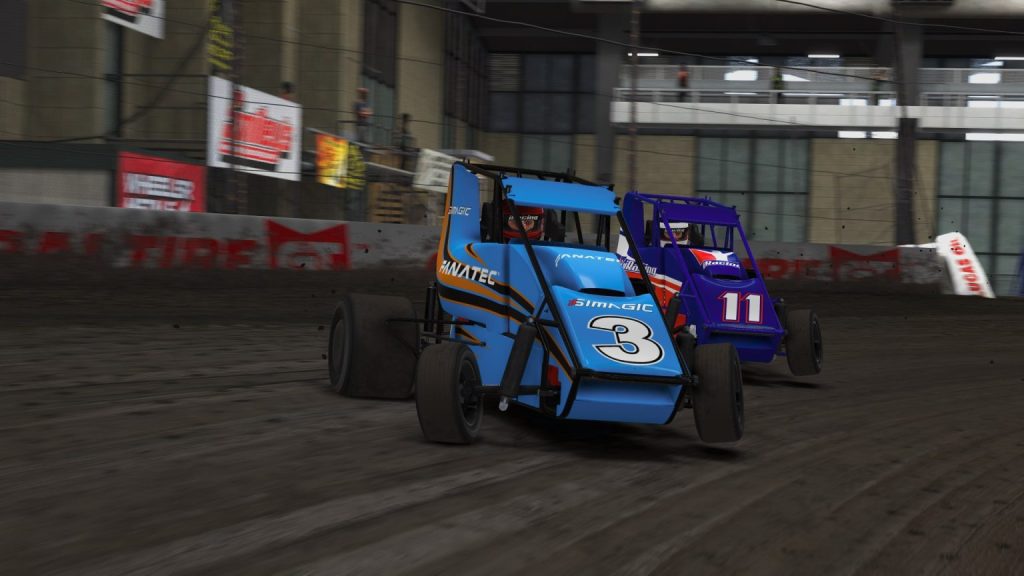
In an era where technology continues to reshape competitive sports, sim racing has emerged as a powerful development tool for real-world drivers. According to Bryce Hauenstein, the value of sim racing goes far beyond lap times and virtual trophies—it’s about building smarter, more prepared racers.
“Sim racing is good for racing because it makes drivers smarter, not just faster,” Hauenstein said. “It trains the brain to handle pressure, chaos, and split-second decisions.”
On the simulator, drivers are constantly placed in high-stress scenarios—restarts, heavy traffic, and side-by-side racing that demand instant reactions. Hauenstein believes these repeated situations sharpen decision-making and reaction time while reinforcing muscle memory that carries directly into real-world driving.
Beyond mental preparation, sim racing plays a significant role in developing race craft. Managing racing lines, reading track conditions, controlling throttle input, and setting up passes or slide jobs over multiple laps are all skills that translate seamlessly from the virtual track to the real one.
“The fundamentals don’t change just because the car is virtual,” Hauenstein explained. “Learning how to race properly is still learning how to race.”
However, Hauenstein is clear that sim racing is not a substitute for real-world seat time. Virtual experience alone won’t instantly turn a driver into a top-tier competitor. That said, he firmly believes it accelerates development.
“It doesn’t replace real-world seat time,” he noted. “But when you look at some of the rookies who are already winning major races, alongside seasoned veterans with strong stats, it’s clear that sim racing shortens the learning curve.”
Hauenstein also points to a noticeable trend among today’s rising stars. Many of the most competitive young drivers can be found racing on iRacing multiple nights a week, consistently sharpening their skills against elite competition.
“I’m on the sim a lot, and most of the high-level rookies and young drivers are there regularly,” he said. “Sim racing raises the level of competition by producing more prepared and confident drivers. That alone is good for the sport.”
As motorsports continues to evolve, sim racing is no longer just a training supplement—it’s becoming a proving ground. By developing smarter decision-makers and more refined racers, the virtual world is helping elevate the real one. And for the future of racing, that’s a win no matter how you slice the corner.
 MicroSprintHub
Leave a comment